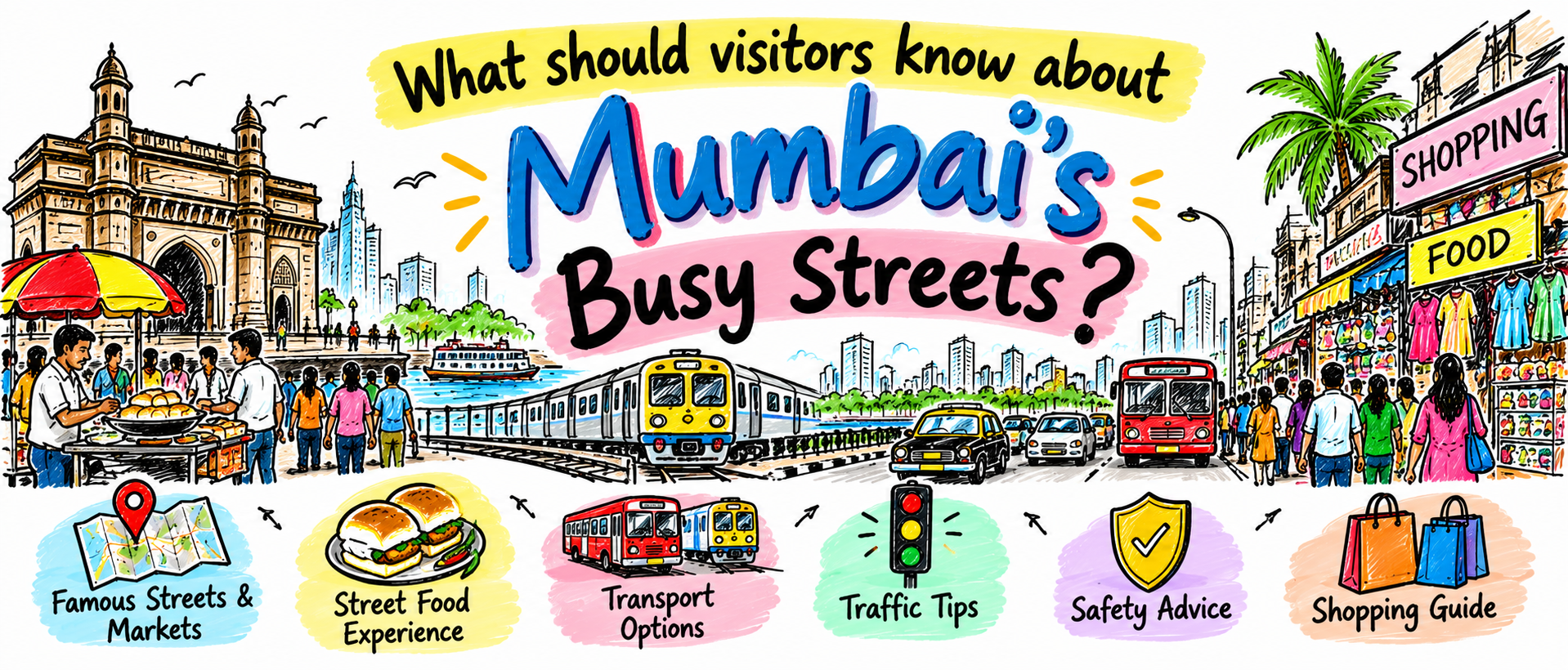
Mumbai is a city full of life, colour, and movement. Its streets bring together workers, shoppers, students, tourists, and street food sellers. Every area has its own look, sounds, and daily rhythm.
Some streets are famous for shopping. Others are known for food, old buildings, or views of the sea. However, Mumbai can feel crowded and confusing to first-time visitors.
Knowing how to cross roads, choose transport, and explore local markets can make your visit easier. This guide explains what visitors should know before exploring Mumbai’s busy streets.
1. Why Are Mumbai’s Streets So Busy?
Mumbai is one of India’s major business and entertainment centres. People travel across the city for work, education, shopping, and daily needs. Tourists also visit its beaches, markets, historic sites, and famous landmarks.
The city has many narrow lanes, busy junctions, railway stations, and shopping areas. These places often become crowded during the day.
Main reasons for heavy street activity
- Work and business: Office workers travel between homes and workplaces.
- Public transport: People move between railway stations, bus stops, and metro stations.
- Shopping: Local markets attract shoppers from many areas.
- Street food: Food stalls and small restaurants draw crowds.
- Tourism: Visitors explore famous places and historic neighbourhoods.
- Festivals: Religious events and public celebrations can affect traffic.
Mumbai’s busy streets are part of its daily life. They can feel exciting, but visitors should plan their journeys carefully.
2. Famous Busy Streets and Markets in Mumbai
Mumbai has many streets worth exploring. Each offers a different experience, from shopping and food to architecture and local culture.
Colaba Causeway
Colaba Causeway is a popular shopping street in South Mumbai. Visitors can find clothes, accessories, jewellery, souvenirs, and small shops.
The area is also close to the Gateway of India. You can combine shopping with nearby sightseeing.
Useful tips:
- Compare prices before buying.
- Ask about the final price before paying.
- Keep your wallet and phone secure.
- Allow extra time when the market is crowded.
Read more about the area through the Mumbai City government’s places of interest guide.
Linking Road, Bandra
Linking Road is known for clothing, footwear, accessories, and street shopping. It attracts shoppers looking for many styles and price ranges.
The street can become crowded, especially during busy shopping periods. Wear comfortable shoes and keep your belongings close.
If you plan to buy several items, compare quality and prices before making a choice.
Hill Road, Bandra
Hill Road offers shops, small stores, and local shopping experiences. It is a useful stop for visitors who want to explore Bandra beyond its cafes and seafront areas.
Traffic and pedestrian movement can be heavy. Stay aware when walking near shop entrances and road crossings.
Crawford Market
Crawford Market is a well-known market area with a long shopping history. Nearby streets also have shops selling daily goods, food items, and other products.
The area can feel busy because shoppers, delivery vehicles, and local workers share the same space.
Visit with a clear shopping list. This helps you save time and avoid unnecessary purchases.
Mohammed Ali Road
Mohammed Ali Road is known for its food culture. During Ramadan, parts of the area become especially popular for evening food visits.
Crowds and food choices can change by season and time of day. Check current local conditions before travelling.
Choose clean-looking food stalls, check food freshness, and drink safe water.
Marine Drive
Marine Drive is different from a crowded shopping lane. It is a famous coastal road with a public promenade and views of the Arabian Sea.
Visitors often come here for a walk, sea views, and evening relaxation. The promenade can become busy around sunset and on weekends.
Follow signs and local instructions. Avoid entering restricted areas near the water.
3. Understand Mumbai Traffic Before You Travel
Traffic is one of the main challenges visitors may face. Travel time can change because of rush hours, roadwork, rain, events, or local restrictions.
A short distance does not always mean a short journey. Check your route before leaving.
When does Mumbai traffic become heavy?
Road conditions vary by location, but weekday mornings and evenings often bring heavy commuter traffic.
| Time | What visitors may notice | Helpful approach |
|---|---|---|
| Early morning | Some roads may be quieter | Start sightseeing early |
| Morning commute | More office and school traffic | Allow extra travel time |
| Afternoon | Conditions vary by area | Check the route before leaving |
| Evening commute | Busy roads and transport hubs | Avoid tight schedules |
| Late evening | Some areas become quieter | Check transport availability |
| Weekends and festivals | Markets and attractions may be crowded | Plan extra time |
These are general patterns, not guaranteed traffic conditions. Check a live map before travelling.
How can visitors save time?
- Group nearby attractions together.
- Avoid crossing the city several times in one day.
- Check traffic before booking a cab.
- Keep extra time between activities.
- Use trains or metro services where they suit your route.
- Check for road closures during festivals and public events.
The Mumbai Traffic Police website provides official traffic information and public notices. Check the Mumbai Traffic Police website before travelling when traffic restrictions may affect your plans.
4. Choose the Right Transport for Busy Streets
The best transport depends on your destination, budget, luggage, and comfort level.
Mumbai offers suburban trains, metro services, buses, taxis, auto-rickshaws, and app-based cabs. Ferries also serve some routes.
The official Mumbai City travel guide explains the main ways to reach the city and move around.
Local trains
Mumbai’s suburban railway is useful for many longer journeys across the city.
Benefits:
- They connect many major neighbourhoods.
- They can save time on suitable routes.
- They help visitors avoid some road traffic.
Things to remember:
- Trains can become very crowded during rush hours.
- Check the correct line, platform, and direction.
- Keep your belongings secure.
- Do not rush to board or leave a moving train.
First-time visitors may prefer travelling outside the busiest periods when possible.
Metro services
Mumbai Metro can be useful on routes served by its lines. It may offer a more comfortable choice than road travel for some journeys.
Check your start and end stations before choosing a route. Service hours, fares, and operating conditions may change, so confirm current details.
BEST buses
BEST buses serve many parts of Mumbai. They can be a useful option for short or medium journeys.
However, buses share road space with other vehicles. Traffic may affect journey time.
Check the route number, direction, and stop before boarding.
Taxis and auto-rickshaws
Taxis and auto-rickshaws can help with local travel where they operate.
Before starting, confirm the destination and fare method. Follow the applicable fare rules or use a trusted booking service.
Auto-rickshaw availability and operating rules vary by area. Check local arrangements before relying on one.
App-based cabs
App-based cabs can be useful for families, visitors carrying luggage, or people travelling late.
Check the vehicle details and registration number before entering. Share your trip details with someone you trust when appropriate.
Simple rule: Choose transport based on the full journey, not just the distance.
5. Road Safety Tips for Visitors
Busy streets need extra care. Drivers, cyclists, buses, and pedestrians may move through the same area.
Visitors who are unfamiliar with local roads should avoid rushing. Stay alert and use marked crossings whenever available.
Cross roads safely
Follow these basic steps:
- Stop at the edge of the footpath.
- Look carefully in both directions.
- Use a marked crossing or traffic signal.
- Watch for turning vehicles.
- Cross only when you have a safe path.
- Keep children close while crossing.
Never assume that every driver has seen you.
Walk on footpaths
Use the footpath whenever one is available. Avoid walking in the middle of the road to pass a crowd.
If a footpath is blocked, move carefully and choose a safer route. Do not step into moving traffic without checking.
Avoid phone distractions
Do not look at your phone while crossing a road. Headphones can also make it harder to hear approaching vehicles.
Stop in a safe place before checking a map or replying to a message.
Stay extra careful during rain
Rain can reduce visibility and make road surfaces slippery. Water may also hide potholes or uneven surfaces.
Walk slowly and avoid stepping into deep water. Allow more time to reach your destination.
For further advice, read the Maharashtra Highway Police road safety guidelines.
6. Street Food: What Should Visitors Know?
Mumbai’s street food is an important part of its local food culture. Visitors may find snacks such as vada pav, pav bhaji, bhel puri, and sev puri.
Food stalls are often found near markets, stations, and shopping streets. Each area may offer different dishes and flavours.
How to choose a food stall
Use these simple checks:
- Choose a stall with steady customer activity.
- Look for clean cooking and serving areas.
- Prefer freshly prepared, hot food.
- Check that drinking water is safe.
- Avoid food that has been left uncovered for a long time.
- Tell the seller about food allergies before ordering.
Busy stalls can be popular, but crowds alone do not prove that food is safe.
Be careful with spicy food
Some local snacks can be very spicy. If you are not used to spicy food, ask for a milder version.
Start with a small portion when trying an unfamiliar dish. This also lets you explore more foods without wasting money.
Keep cash and digital payments ready
Some sellers may accept digital payments, while others may prefer cash. Carry a small amount of cash and keep it separate from your main wallet.
Check the amount before confirming a digital payment.
7. Shopping on Mumbai’s Busy Streets
Street shopping can be fun, but it helps to shop with a plan.
You may find clothes, shoes, jewellery, gifts, bags, and household goods. Prices and product quality can vary from shop to shop.
Compare prices before buying
Do not buy the first item you see. Check a few shops and compare similar products.
Ask about the price politely. If bargaining is common, you can make a reasonable offer without arguing.
Check product quality
Before paying, inspect the item carefully.
- Check clothing seams and zips.
- Test bag handles and fasteners.
- Look for damage or missing parts.
- Confirm the size and colour.
- Ask about returns before completing the purchase.
Keep receipts for higher-value items when available.
Avoid carrying too many bags
Large shopping bags can make crowded streets harder to navigate. They may also make boarding public transport more difficult.
Carry only what you need and keep your hands free when crossing roads.
8. What Should Visitors Carry?
A small day bag can make exploring Mumbai easier. Carry only the items you need.
Useful items for a day out
- A charged mobile phone.
- A power bank, if needed.
- Drinking water.
- Comfortable walking shoes.
- A small umbrella or raincoat during wet weather.
- A payment card and some cash.
- Identification and essential booking details.
- Any personal medicine you normally need.
- A note of your hotel or meeting point.
Keep valuables out of easy reach. Avoid displaying large amounts of cash in crowded places.
During the monsoon, protect your phone and important documents from water. Check the forecast before starting your journey.
9. How Can Visitors Handle Crowds?
Crowds are common around popular markets, stations, festivals, and tourist spots. They may slow walking and make it harder to stay with your group.
A little planning can help you remain calm.
Travel at a suitable time
Visit popular markets earlier in the day when practical. Some food areas are more active in the evening, so plan around the experience you want.
Check opening hours before visiting individual shops or attractions.
Agree on a meeting point
If you travel with family or friends, choose a clear meeting point. This is helpful if someone gets separated in a crowded place.
For children, keep them within sight and hold their hands near traffic.
Protect your belongings
Keep your phone, wallet, and bag secure. Avoid leaving valuables on tables or in open bags.
Be careful when boarding trains, entering markets, or moving through crowded queues.
Stay patient
Do not push through crowds or rush across roads. Wait for a safe opportunity to move.
If an area feels too crowded, step away and choose another route.
10. Which Streets Should Different Visitors Explore?
Different travellers may enjoy different parts of Mumbai. Choose places that match your interests and available time.
| Type of visitor | Suggested area | Why it may suit you |
|---|---|---|
| First-time visitor | Colaba and the Gateway of India area | Shopping and famous sights close together |
| Street-shopping fan | Linking Road or Hill Road | Clothing, accessories, and local shops |
| Food lover | Mohammed Ali Road or selected local food areas | A range of local food experiences |
| History lover | Fort and nearby heritage areas | Historic buildings and city landmarks |
| Sea-view lover | Marine Drive | Coastal views and a walking promenade |
| Family traveller | Areas with planned attractions and easy transport | More control over pace and breaks |
| Budget-conscious visitor | Local markets and public transport routes | More ways to manage daily costs |
These are starting points rather than fixed itineraries. Check current conditions and choose locations that are practical for your travel dates.
11. A Simple One-Day Plan for Exploring Mumbai
You do not need to visit every famous street in one day. Choose a few nearby places and leave room for delays.
Here is an illustrative one-day plan for a visitor interested in shopping, sightseeing, and local food.
Morning: Start in South Mumbai
Begin around the Gateway of India area. Enjoy the waterfront and explore nearby sights.
If you plan to visit a specific attraction, check its current entry rules and opening hours first.
Late morning: Explore Colaba Causeway
Walk through the shopping area and browse local stores. Take breaks when the streets become crowded.
Set a spending limit before shopping.
Afternoon: Enjoy lunch and take a break
Choose a clean restaurant or food stall. Drink safe water and rest before continuing.
Allow time for travel between locations.
Late afternoon: Visit Marine Drive
Head to Marine Drive if the weather and traffic suit your plan. Enjoy the sea views and take a relaxed walk.
Evening: Choose dinner near your final stop
Pick a suitable food area based on your location. Avoid travelling across the city just for one meal if traffic is heavy.
Planning tip: This plan is flexible. Change the order when weather, traffic, opening hours, or personal needs require it.
12. Common Mistakes Visitors Should Avoid
Small mistakes can waste time or make a city visit stressful. These simple fixes can help.
Mistake 1: Planning too many places
Trying to visit many distant areas in one day can leave little time to enjoy them.
Better approach: Choose two or three main areas and explore them properly.
Mistake 2: Ignoring traffic
A short road journey may take longer than expected.
Better approach: Check live traffic and keep extra time between activities.
Mistake 3: Crossing roads carelessly
Following other people across a road does not always mean it is safe.
Better approach: Use marked crossings and follow traffic signals.
Mistake 4: Carrying too much cash
Keeping all your money in one place increases the risk of losing it.
Better approach: Carry a small amount for daily use and secure the rest.
Mistake 5: Buying without comparing prices
The first shop may not offer the best value.
Better approach: Compare similar products and check quality before paying.
Mistake 6: Forgetting the weather
Heat, humidity, and rain can affect walking plans.
Better approach: Check the forecast and carry suitable clothing.
Mistake 7: Assuming every transport option works everywhere
Some services or vehicle types may not operate in every area.
Better approach: Confirm transport options for your route before leaving.
13. Practical Tips for a Smooth Mumbai Visit
Use this quick checklist before heading out.
- Check the weather and traffic.
- Save your destination on your phone.
- Confirm transport routes and operating times.
- Wear comfortable shoes.
- Carry water and a small day bag.
- Keep valuables secure.
- Use marked road crossings.
- Compare prices before shopping.
- Choose food from clean, reliable-looking stalls.
- Leave extra time for crowded areas.
- Follow local signs and official instructions.
- Keep a backup plan in case of rain or delays.
Mumbai can feel fast-paced at first. However, a little preparation can make the streets easier to explore.
Frequently Asked Questions
1. Why are Mumbai’s streets so crowded?
Mumbai is a major centre for work, shopping, education, and tourism. Many people use its roads and transport services every day.
2. Which are some famous shopping streets in Mumbai?
Colaba Causeway, Linking Road, and Hill Road are popular choices. Each offers different shops and products.
3. Is it safe to walk on Mumbai’s busy streets?
Walking can be manageable when you stay alert and follow road safety rules. Use footpaths and marked crossings wherever possible.
4. What is the best way to travel around Mumbai?
It depends on your route. Local trains and metro services may suit some journeys, while buses, taxis, and auto-rickshaws may suit others.
5. When should visitors avoid travelling through heavy traffic?
Weekday commute periods can be busy in many areas. Check live traffic before leaving because conditions vary by route and day.
6. Is street food worth trying in Mumbai?
Yes, street food is an important part of the city’s food culture. Choose clean stalls and prefer freshly prepared food.
7. How can I protect my belongings in crowded markets?
Keep your phone and wallet secure. Carry your bag close to your body and avoid displaying large amounts of cash.
8. What should I wear when exploring Mumbai?
Wear comfortable clothes and walking shoes. Carry an umbrella or raincoat during wet weather.
9. Can I explore Mumbai’s famous streets in one day?
You can explore a few areas in one day. Choose nearby places and leave enough time for traffic, food, and breaks.
10. What should first-time visitors remember most?
Plan your route, use safe crossings, check traffic, and keep your belongings secure. Most importantly, give yourself time to enjoy the city.
Conclusion
Mumbai’s busy streets show the city’s energy, culture, and daily life. From Colaba Causeway to Marine Drive, each area offers something different.
Visitors can enjoy these places with a little planning. Choose suitable transport, check traffic, follow road safety rules, and explore at a comfortable pace.
Start with a few nearby places instead of rushing across the city. This simple approach can help you enjoy Mumbai’s streets with greater comfort and confidence.