Introduction
Mumbai is a city full of history, culture, food, and coastal views. It welcomes families, couples, solo travelers, and first-time visitors. But the season you choose can shape your holiday.
Some travelers enjoy pleasant weather and long walks. Others love rainy views and green landscapes. Many prefer shopping, local food, and indoor activities during hot afternoons.
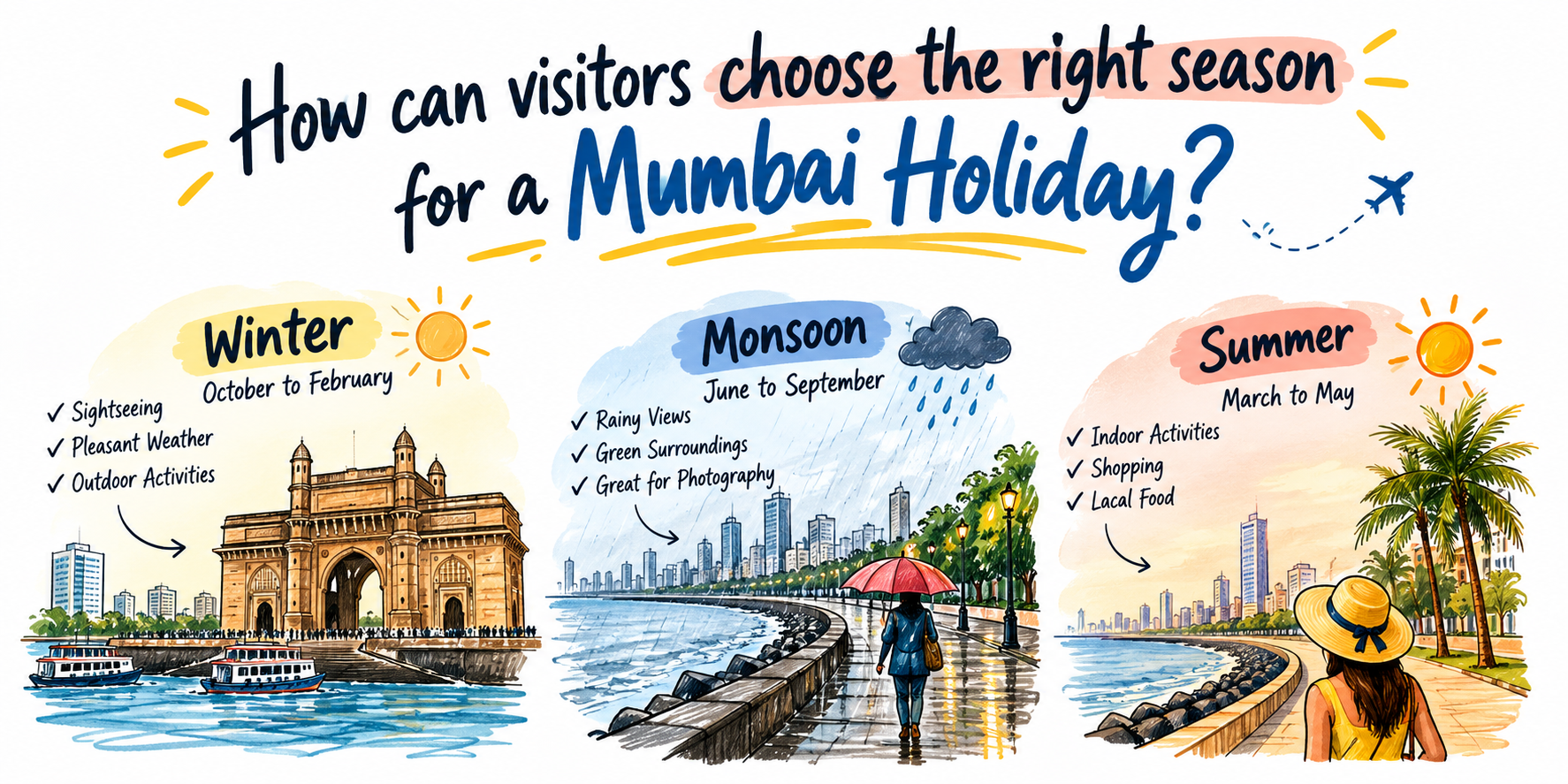
October to February is generally a good time to visit Mumbai for sightseeing. June to September brings the monsoon, while March to May often brings hot and humid weather.
Each season offers a different travel experience. This guide compares all three seasons to help you choose the right time for your trip.
1. Understanding Mumbai’s Travel Seasons
Mumbai has a tropical climate. Its coastal location affects temperature, humidity, and rainfall throughout the year.
Visitors should understand the three main seasons before booking their holiday.
- Winter and post-monsoon: October to February generally offers better conditions for sightseeing.
- Monsoon: June to September brings rain, cloudy skies, and green surroundings.
- Summer: March to May often brings hot and humid weather.
These months provide general guidance. Actual weather can change from day to day.
Before booking, check the weather forecast and list the places you want to explore. This helps you choose suitable dates and prepare for possible changes.
2. Winter in Mumbai: October to February
Overview
Winter is a popular choice for visitors who want to explore Mumbai. The weather is generally more comfortable than during the hotter months.
October can still feel warm and humid. November, December, January, and February often offer pleasant conditions for outdoor activities.
This season suits travelers who want to explore historic landmarks, museums, markets, and coastal areas. You can also enjoy local food and evening walks.
Key Activities
Visit famous landmarks: Explore the Gateway of India and admire its historic surroundings. You can also visit nearby heritage buildings and popular attractions.
Enjoy coastal views: Walk along Marine Drive when the weather feels comfortable. The waterfront offers lovely city views, especially during the evening.
Explore museums: Add museums to your itinerary for a cultural experience. Check opening hours before visiting.
Try local food: Enjoy popular dishes such as vada pav, pav bhaji, bhel puri, and sev puri. Choose clean food stalls and trusted restaurants.
Visit local markets: Explore Mumbai’s markets for clothes, accessories, handicrafts, and souvenirs. Compare prices before buying.
Pros
- Comfortable conditions for many outdoor activities.
- Suitable for first-time visitors.
- Good opportunities for sightseeing and photography.
- Easy to combine outdoor visits with indoor activities.
- A practical choice for families and couples.
Cons
- Popular attractions can become crowded during holidays.
- Hotel prices may increase on busy dates.
- October can still feel warm.
- Some afternoons may be humid.
Best For
Winter suits visitors who want to explore Mumbai’s major attractions. Families can plan sightseeing with regular breaks.
Couples can enjoy coastal views and local dining. First-time visitors can explore several parts of the city during one trip.
Not Ideal For
Travelers who mainly want rainy landscapes may prefer the monsoon. Budget-conscious visitors should compare hotel and transport prices before choosing dates.
Travel Tips
- Start outdoor sightseeing early.
- Carry drinking water during long walks.
- Book hotels before popular holiday periods.
- Check attraction timings before leaving.
- Leave enough time for local travel.
Verdict: Choose October to February if comfortable sightseeing is your main priority.
3. Monsoon in Mumbai: June to September
Overview
The monsoon changes Mumbai’s appearance. Rain-covered roads, cloudy skies, and coastal views create a different atmosphere.
Rain also brings fresh greenery to nearby areas of Maharashtra. This season can appeal to nature lovers and photographers.
However, Mumbai can receive heavy rainfall. Roads may become busy, journeys can take longer, and outdoor plans may need changes.
Key Activities
Enjoy city photography: Cloudy skies and wet streets can create interesting photo opportunities. Protect your camera and phone from rain.
Explore indoor attractions: Visit museums, galleries, and indoor entertainment spaces during heavy showers.
Try local snacks: Enjoy hot tea and popular snacks during rainy weather. Choose places that follow good food hygiene.
Explore nearby green areas: Nearby hills can look lush during the monsoon. Check road conditions and weather alerts before leaving Mumbai.
Enjoy coastal views safely: Visit suitable public viewpoints when conditions allow. Avoid exposed waterfronts during rough seas or dangerous weather.
Pros
- Green landscapes in nearby natural areas.
- Different views of Mumbai’s coastline.
- Interesting opportunities for photography.
- Suitable for people who enjoy rainy weather.
- A good option for visitors with flexible plans.
Cons
- Heavy rain can delay travel.
- Outdoor sightseeing becomes less predictable.
- Wet paths can become slippery.
- Some activities may stop due to weather.
- Sea conditions may make certain places unsafe.
Best For
The monsoon suits photographers, nature lovers, and travelers who enjoy rain. It can also suit visitors who prefer a relaxed holiday.
Flexible travelers can switch between indoor attractions and outdoor activities as conditions change.
Not Ideal For
This season may not suit visitors with tight schedules. It can also be difficult for people who dislike rain or need reliable outdoor access.
Travel Tips
- Carry an umbrella or raincoat.
- Wear shoes with a good grip.
- Protect your phone and documents from water.
- Check weather warnings before outdoor trips.
- Allow extra time for journeys.
- Keep indoor activities ready as backup options.
Verdict: Choose the monsoon if you enjoy rainy scenery and flexible travel plans. Always put safety before outdoor activities.
4. Summer in Mumbai: March to May
Overview
Summer brings hot and humid conditions to Mumbai. Long outdoor walks can feel tiring during the hottest part of the day.
Still, you can enjoy the city during summer. Plan indoor activities, shopping, local dining, and shorter sightseeing trips.
The key is to organize your schedule around the heat. Start outdoor visits early and take regular breaks.
Key Activities
Visit indoor attractions: Explore museums and indoor entertainment spaces during hot afternoons.
Enjoy shopping: Visit local markets and shopping centres. Choose places that match your interests and budget.
Plan morning sightseeing: Visit outdoor attractions early when conditions may feel more comfortable.
Explore local food: Try Mumbai’s popular dishes and local snacks. Drink enough water during your outings.
Enjoy evening walks: Schedule outdoor activities later in the day when the weather permits.
Pros
- Indoor attractions provide many activity choices.
- Flexible schedules help reduce heat exposure.
- Early mornings can suit outdoor sightseeing.
- Suitable for travelers with fixed holiday dates.
- Short outings can fit into a relaxed itinerary.
Cons
- Hot and humid weather can cause discomfort.
- Long daytime walks may feel tiring.
- Outdoor activities may need shorter sessions.
- Visitors may need more rest and water.
- Busy sightseeing schedules can become exhausting.
Best For
Summer can suit travelers who enjoy indoor attractions and flexible schedules. It may also work for visitors who cannot change their travel dates.
You can explore selected landmarks, enjoy shopping, and try local food without spending the whole day outdoors.
Not Ideal For
Summer may not suit visitors who want long outdoor walks throughout the day. It may also challenge people who find heat uncomfortable.
Travel Tips
- Wear light and breathable clothing.
- Carry drinking water.
- Use sunscreen during outdoor activities.
- Avoid long walks during the hottest hours.
- Plan indoor activities for midday.
- Take breaks between sightseeing stops.
Verdict: Summer can work well when you plan around the heat instead of trying to do everything outdoors.
5. Winter vs Monsoon vs Summer: Comparison Table
Compare the seasons before choosing your travel dates.
| Factor | Winter | Monsoon | Summer |
|---|---|---|---|
| Months | October–February | June–September | March–May |
| Weather | Generally more comfortable | Rainy and humid | Hot and humid |
| Outdoor sightseeing | Best overall choice | Depends on rainfall | Better during cooler hours |
| Scenery | City and coastal views | Green surroundings and cloudy skies | Bright conditions on suitable days |
| Photography | City and coastal scenes | Rainy streets and green landscapes | Morning and evening scenes |
| Family travel | Suitable for many families | Requires flexible plans | Requires heat precautions |
| Main challenge | Crowds on busy dates | Heavy rain and travel delays | Heat and humidity |
| Best suited to | General sightseeing | Rain and nature lovers | Indoor activities |
This comparison offers general seasonal guidance. Check the forecast before booking activities or travelling to nearby destinations.
6. Which Season Is Best for Different Travelers?
The right season depends on your interests, travel group, and preferred activities.
For Families
October to February is a practical choice for many family holidays. You can combine landmarks, museums, food stops, and shopping.
Plan regular breaks for children and older family members. Avoid packing too many attractions into one day.
For Couples
Winter can suit couples who enjoy coastal walks, restaurants, and sightseeing. The monsoon may appeal to couples who enjoy rainy views.
Choose a season that matches both travelers’ interests and comfort.
For Solo Travelers
Winter can make outdoor sightseeing easier to plan. Check local transport options and attraction timings before leaving.
During the monsoon, allow more time for journeys. Avoid unsafe coastal areas during rough weather.
For Nature Lovers
The monsoon can provide beautiful views of green hills and seasonal waterfalls. Nearby areas may offer more natural scenery during rainy months.
Check weather alerts before planning trips outside Mumbai. Avoid restricted areas and unsafe trails.
For First-Time Visitors
October to February is a strong starting choice. You can explore famous attractions, local markets, and Mumbai’s food culture.
Keep your schedule flexible. Busy roads and unexpected delays may affect travel time.
For Budget-Conscious Travelers
Compare hotel rates, transport costs, and travel dates before booking. Prices can vary according to demand and location.
Do not assume every summer or monsoon date will cost less. Compare the complete trip cost instead of checking hotel prices alone.
7. How to Choose the Right Month for Your Mumbai Holiday
Follow these simple steps to choose suitable travel dates.
Step 1: List Your Main Attractions
Write down the places you want to visit. Include landmarks, museums, markets, and restaurants.
This list helps you understand how much outdoor time your holiday will need.
Step 2: Choose Your Weather Preference
Decide whether you prefer comfortable sightseeing weather, rainy views, or indoor activities.
Your weather preference can help narrow your travel options.
Step 3: Check Your Travel Dates
Review your work leave, school holidays, and transport options. Check whether special events may affect your plans.
Compare available dates before booking your tickets and hotel.
Step 4: Set Your Budget
Include accommodation, transport, meals, attraction tickets, and extra travel costs. Keep some money aside for unexpected changes.
Compare the full cost of different travel dates before making a decision.
Step 5: Prepare a Flexible Itinerary
Plan outdoor activities for suitable weather. Keep indoor attractions ready for rainy periods or hot afternoons.
A flexible schedule helps you enjoy your trip even when plans change.
8. Example: Planning a Three-Day Mumbai Holiday
A three-day holiday can cover several major attractions. Your final route depends on your interests, travel time, and the weather.
Day 1: Famous Landmarks
- Visit the Gateway of India.
- Explore nearby historic buildings.
- Enjoy local food in the area.
- Walk along Marine Drive when conditions allow.
Day 2: Culture and Local Experiences
- Visit a museum or cultural attraction.
- Explore local markets.
- Try popular Mumbai dishes.
- Enjoy a relaxed evening outing.
Day 3: Flexible Sightseeing
- Visit any remaining attractions.
- Explore a shopping area.
- Enjoy a relaxed meal.
- Leave enough time for your return journey.
Seasonal adjustment: Winter may allow more outdoor activities. During the monsoon, keep indoor alternatives ready. In summer, move outdoor visits to cooler hours.
Explore Mumbai Orbit’s three-day Mumbai travel itinerary for more sightseeing ideas.
9. Common Travel Planning Mistakes to Avoid
Even a good destination can become tiring when your plan ignores the weather.
Mistake 1: Planning Too Many Places
Mumbai has busy roads, and travel between attractions takes time. Choose a realistic number of stops.
Mistake 2: Ignoring Weather Updates
Seasonal advice cannot predict daily rain or heat. Check the forecast before planning outdoor activities.
Mistake 3: Packing the Wrong Clothes
Warm weather calls for breathable clothing. Monsoon travel requires rain protection and shoes with a good grip.
Mistake 4: Booking Without Comparing Prices
Compare hotel rates, transport costs, and travel dates before paying. Review cancellation terms when your plans may change.
Mistake 5: Ignoring Safety Warnings
Heavy rain and rough seas can make certain places unsafe. Follow local warnings and avoid restricted areas.
Mistake 6: Forgetting Rest Breaks
Long sightseeing days can feel tiring. Include breaks for meals, water, and unexpected delays.
10. Frequently Asked Questions
1. What is the best time to visit Mumbai?
October to February is generally a good period for sightseeing. The weather is often more comfortable than during summer.
2. Which month is best for a Mumbai holiday?
November, December, January, and February can be good options for sightseeing. Check weather forecasts and prices for your dates.
3. Is the monsoon a good time to visit Mumbai?
Yes, if you enjoy rain and can adjust your plans. Heavy showers may affect outdoor activities and travel time.
4. Is Mumbai too hot during summer?
Summer can feel hot and humid. Plan indoor activities during hot afternoons and outdoor visits during cooler hours.
5. Which season is better for families?
October to February is a good starting choice for many families. Plan breaks, suitable transport, and activities for everyone.
6. What should I pack for a monsoon trip?
Carry an umbrella or raincoat, quick-drying clothes, and shoes with a good grip. Protect your phone and travel documents from water.
7. Can I enjoy Mumbai in three days?
Yes. Three days can cover several major attractions. Your schedule depends on your interests, travel pace, and the weather.
8. Should I check the weather before booking?
Yes. Seasonal advice helps you choose a period, but daily conditions can change. Check forecasts closer to your departure date.
9. Is winter always cool in Mumbai?
No. Mumbai can still feel warm and humid during the preferred sightseeing period. Check the forecast for your chosen dates.
10. How can I make my Mumbai holiday more comfortable?
Choose a season that suits your interests. Pack suitable clothing, plan realistic travel times, drink enough water, and keep backup activities ready.
Conclusion
The right season can make your Mumbai holiday easier to plan and more enjoyable. October to February is generally a strong choice for sightseeing.
The monsoon suits travelers who love rain and green surroundings. Summer can also work well with indoor activities and a flexible schedule.
Before booking, compare the seasons, check your budget, and review the weather forecast. Choose a plan that matches your interests and comfort.
A well-planned Mumbai holiday is not only about choosing the right month. It is also about making the most of each day.