Introduction
Mumbai offers famous landmarks, local markets, tasty food, and beautiful coastal views. But finding the right travel information can be difficult for first-time visitors.
You may find different opening hours on different websites. A transport route may change, or a popular attraction may have special entry rules. Old reviews can also give the wrong idea about a place.
So, how can tourists find information they can trust?
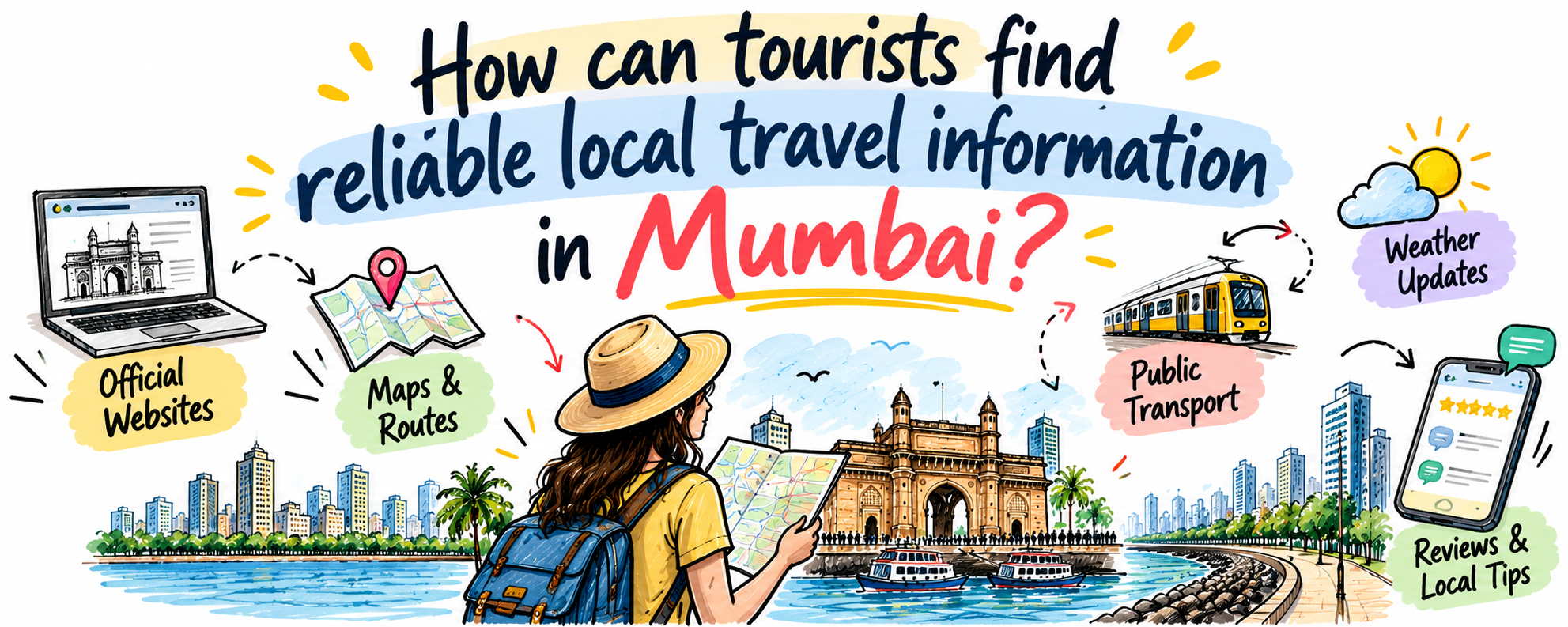
The best approach is to check official websites, compare recent local updates, and confirm important details before travelling. Maps and local advice can also help you plan your trip.
This guide explains where to find reliable information about Mumbai. You will learn how to check attractions, transport, weather, local services, and tourist reviews.
1. Start With Official Tourism Websites
Official tourism websites are a good starting point for planning your Mumbai holiday. They help you learn about attractions, local history, and travel options.
Maharashtra Tourism Website
The official Maharashtra Tourism website provides information about Mumbai’s attractions and travel seasons.
You can learn about famous landmarks, religious sites, and cultural places. Use this information to decide which areas you want to explore.
The website also gives general guidance about the best time to visit. However, seasonal advice cannot replace a current weather forecast.
Best for: First-time visitors, families, and tourists planning a sightseeing trip.
Mumbai City Government Website
The official Mumbai City tourism website lists several tourist attractions.
It covers places such as the Gateway of India, Haji Ali Dargah, and Chhatrapati Shivaji Maharaj Vastu Sangrahalaya. This can help you discover places for your itinerary.
The How to Reach page also explains general transport options for reaching Mumbai.
Best for: Tourists who want city information from a government source.
How to Use These Websites
Follow these simple steps:
- Search for the attraction or area you want to visit.
- Read the official description and location details.
- Check the latest available information.
- Note any travel details that need further confirmation.
- Compare the information with current local updates.
Use official tourism pages to plan your trip. Confirm opening hours, ticket prices, and special rules with the attraction before travelling.
2. Use Maps to Check Locations and Routes
A map app can help you find attractions, restaurants, hotels, hospitals, and transport stations. It can also show routes between places.
However, map information may not always be current. A business may move, a road may close, or a listing may show old opening hours.
What Should You Check on a Map?
Before visiting a place, check these details:
- The exact address and map pin.
- The distance from your hotel.
- Available public transport nearby.
- The walking route and entrance location.
- Recent reviews and photographs.
- Current traffic conditions, when available.
Compare the Map With Official Information
Suppose you plan to visit the Gateway of India. Search for the attraction on a map first.
Then compare the location with the official Mumbai City listing. This helps you confirm that you have selected the correct place.
Do the same when searching for museums, temples, railway stations, or ferry points.
Practical tip: Save the map pins for your hotel and main attractions before leaving. This can help you navigate when your internet connection becomes weak.
3. Find Reliable Public Transport Information
Mumbai has local trains, metro services, buses, taxis, and auto-rickshaws. The best option depends on your starting point, destination, budget, and comfort.
Do not rely on an old travel blog for current routes or service times. Check the transport operator’s information when the journey matters.
Mumbai Metro
The Maha Mumbai Metro official website provides information about its metro network.
Use official metro pages to check relevant routes and stations. Review the operator’s current travel and ticket information before your journey.
A metro ride may save road travel time on a suitable route. However, you should also consider the distance between stations and your final destination.
Local Trains
Local trains connect many parts of Mumbai and its wider region. They can be useful when both ends of your journey are close to suitable stations.
For train-running information, the National Train Enquiry System app is listed by Indian Railways as an official travel app.
Check your station, train direction, and current service information. Allow extra time for walking, transfers, and crowded stations.
Buses, Taxis, and Auto-Rickshaws
For buses, check the relevant operator’s route information when available. For taxis and auto-rickshaws, confirm the pickup point and fare method before starting.
You can also ask your hotel about common local routes. Compare that advice with current map directions.
Which Transport Source Should You Use?
| Information Needed | Useful Source | What to Confirm |
|---|---|---|
| Tourist attractions | Government tourism websites | Location and visitor information |
| Metro routes | Official metro website | Stations and service details |
| Train information | Indian Railways enquiry service | Train status and station details |
| Road traffic | Mumbai Traffic Police | Official notices and traffic guidance |
| Directions | Map apps | Route, distance, and current conditions |
| Taxi or local ride | Transport provider | Pickup point, fare, and trip details |
Use the source that matches your question. One website rarely provides every detail you need.
4. Check Weather and Local Travel Warnings
Mumbai’s weather can affect outdoor plans, traffic, and coastal activities. Heavy rain may change your travel schedule or make some areas unsafe.
The India Meteorological Department’s Mumbai website provides forecasts, weather observations, and warnings.
Check it before visiting beaches, planning long walks, or arranging trips outside the city.
What Should You Check?
Weather forecasts: Review expected rain and other conditions before leaving your hotel.
Heavy rain warnings: Change your plans when authorities advise caution.
Road traffic notices: Visit the Mumbai Traffic Police website for official traffic information and notices.
Coastal safety: Follow local instructions near the sea. Avoid restricted waterfront areas during dangerous conditions.
Travel changes: Recheck transport details if weather or local events may affect your route.
Do not rely only on an old social media post about road closures or weather warnings. Look for the original announcement and check its date.
5. Check Reviews Before Visiting Local Places
Reviews can help you learn about restaurants, hotels, shops, attractions, and local services. However, not every review tells the full story.
Some reviews may be old. Others may describe one person’s experience rather than the usual service.
How to Judge Reviews
Read recent reviews: Give more attention to comments from the recent weeks or months. Older reviews may not reflect current conditions.
Compare several opinions: Look for repeated comments about the same issue. One negative review should not decide your choice.
Check photographs: Recent visitor photos can help you understand a place’s appearance and surroundings.
Read specific details: Reviews that describe service, location, cleanliness, or access can be more useful than general praise.
Compare different platforms: If a place is important to your trip, check more than one source.
Watch for Warning Signs
Be careful when reviews contain only vague praise or repeat very similar wording. Also check whether the address, photos, and business name match across listings.
Reviews should support your decision, not replace direct confirmation.
Best practice: Use reviews to create a shortlist. Then contact the business or check its official page before making an important booking.
6. Ask Hotel Staff and Trusted Local People
Local advice can help you understand a place in ways that websites may not explain.
Hotel staff, established local guides, and trusted residents may know useful routes, common travel issues, and suitable places to eat.
However, local advice is still advice. Confirm important details through a reliable source.
Questions You Can Ask
- Which route is suitable for my destination?
- Is public transport available nearby?
- Does the attraction require advance booking?
- Are there any known access problems today?
- Which nearby places can I visit together?
- Where can I check current transport information?
How to Choose a Local Guide
If you want a guided tour, check the guide’s identity, experience, and service details. Ask for a clear price and a list of what the tour includes.
You can also ask your hotel or a recognised tour provider for suggestions. Read recent reviews and confirm the meeting point before paying.
Avoid accepting expensive tours from strangers who approach you with pressure. Never hand over money without understanding the service and its terms.
Practical tip: Ask two sources when the information matters. For example, check the route online and confirm it with your hotel.
7. Use Travel Apps and Websites With Care
Travel apps can save time, but you should know what each tool can and cannot do.
A map app may help with directions. A review platform may help you compare restaurants. An official transport site may provide service details.
Use each source for the information it handles best.
Useful Categories of Travel Tools
| Tool Type | Main Use | Limitation |
|---|---|---|
| Map apps | Routes, addresses, and nearby places | Listings or roads may change |
| Review platforms | Visitor experiences and photographs | Reviews may be old or biased |
| Official tourism sites | Attractions and general destination details | May not show every daily change |
| Transport websites | Routes, service details, and tickets | Information differs by operator |
| Weather websites | Forecasts and warnings | Forecasts can change |
| Local guides | Area knowledge and personal help | Quality and accuracy vary |
Keep Your Information Safe
Use official websites or recognised app stores when downloading travel apps. Check the developer’s name before installing an application.
Avoid suspicious links sent by unknown people. Do not share banking PINs, passwords, or one-time passwords to obtain travel information.
For payments and bookings, confirm the provider’s name, final price, and cancellation terms before paying.
8. Confirm Opening Hours, Prices, and Booking Rules
One of the most common travel problems is reaching an attraction and finding it closed.
Websites may show regular opening hours, while holidays, maintenance, or special events can change access.
Before Visiting an Attraction
- Find the attraction’s official website or verified contact details.
- Check opening hours for your chosen day.
- Confirm ticket prices and booking requirements.
- Ask about restrictions on photography or entry.
- Recheck the details before departure.
If the attraction has no clear official page, contact its management through a verified channel. You can also ask a trusted hotel for help confirming the information.
Before Booking a Tour or Ride
Check what the price includes. Confirm the meeting point, pickup time, cancellation rules, and payment method.
Keep a copy of your booking confirmation. Save the provider’s contact details in case plans change.
Never assume that an old blog post contains the latest price or schedule.
9. A Simple Example of Travel Research in Mumbai
Imagine you plan to visit the Gateway of India, a museum, and Marine Drive.
Instead of relying on one article, collect the information in a few clear steps.
Step 1: Find the Attractions
Use the official Mumbai tourist places directory to identify suitable places.
Step 2: Check the Locations
Find each attraction on a map. Check how far the places are from each other and from your hotel.
Step 3: Confirm Entry Details
Check opening hours, ticket rules, and any booking needs directly with each attraction.
Step 4: Choose Your Transport
Compare suitable metro, train, taxi, or walking options. Review current traffic and service information.
Step 5: Check Weather Conditions
Look at the IMD Mumbai forecast, especially if your plans include long outdoor visits.
Step 6: Ask for Local Advice
Ask your hotel about practical route choices or any known local issues. Confirm important claims through official sources.
Step 7: Save Your Plan
Save your map pins, tickets, addresses, and transport notes. Keep copies of important booking details on your phone.
This method helps you plan with confidence without relying on a single source.
10. Common Mistakes to Avoid When Researching Mumbai Travel
Mistake 1: Trusting the First Search Result
The first result may be old or incomplete. Compare it with official information before making important decisions.
Mistake 2: Following Old Travel Advice
Transport routes, ticket prices, and business hours can change. Check the date of the information and confirm details again.
Mistake 3: Believing Every Online Review
Reviews reflect different experiences. Look for recent patterns across several comments.
Mistake 4: Ignoring Weather Warnings
A normal sightseeing plan may not suit a day with heavy rain or safety warnings. Check the latest forecast before leaving.
Mistake 5: Paying Before Checking the Provider
Confirm the provider’s identity, service, final price, and payment terms before booking.
Mistake 6: Depending on One Source
A map may show where a place is, but not whether it is open today. Combine maps with official pages and current updates.
Mistake 7: Leaving Without Saving Details
Weak internet access can make it harder to find addresses or bookings. Save important information before leaving your hotel.
11. Frequently Asked Questions
1. Where can tourists find reliable travel information about Mumbai?
Start with Maharashtra Tourism and the official Mumbai City tourism website. Use official transport websites for routes and service details.
2. How can I check Mumbai’s current traffic information?
Visit the Mumbai Traffic Police website for official traffic information and notices. Map apps can also help with route planning.
3. Which website lists tourist attractions in Mumbai?
The Mumbai City tourist places directory lists several city attractions. Maharashtra Tourism also provides a Mumbai destination guide.
4. How can I find reliable public transport information?
Use the official metro website for relevant metro services. Use the Indian Railways enquiry service for train-running information.
5. Are online reviews reliable for choosing restaurants and hotels?
They can be useful, but check recent reviews from several users. Confirm important details directly with the business.
6. How can I check Mumbai’s weather before sightseeing?
Use the India Meteorological Department’s Mumbai website. Review forecasts and warnings before outdoor activities.
7. Should I trust local travel guides?
Choose a guide whose identity and service details you can verify. Confirm the price, meeting point, and services before paying.
8. How can I avoid incorrect opening hours?
Check the attraction’s official website or contact its management. Reconfirm the details before travelling.
9. Can I use social media to find local travel tips?
Yes, but treat social posts as suggestions rather than final proof. Check the source, date, and details through reliable websites.
10. How can I prepare if my internet connection stops working?
Save maps, addresses, booking confirmations, and useful contact details before leaving. Keep a written note of key destinations when needed.
Conclusion
Finding reliable local travel information can make your Mumbai holiday easier and safer. Start with official tourism websites, then check maps, transport details, and current weather.
Use recent reviews and trusted local advice to support your decisions. Confirm important opening hours, ticket prices, and bookings before travelling.
The smartest way to plan Mumbai is to compare useful sources, check the latest details, and prepare before you leave.